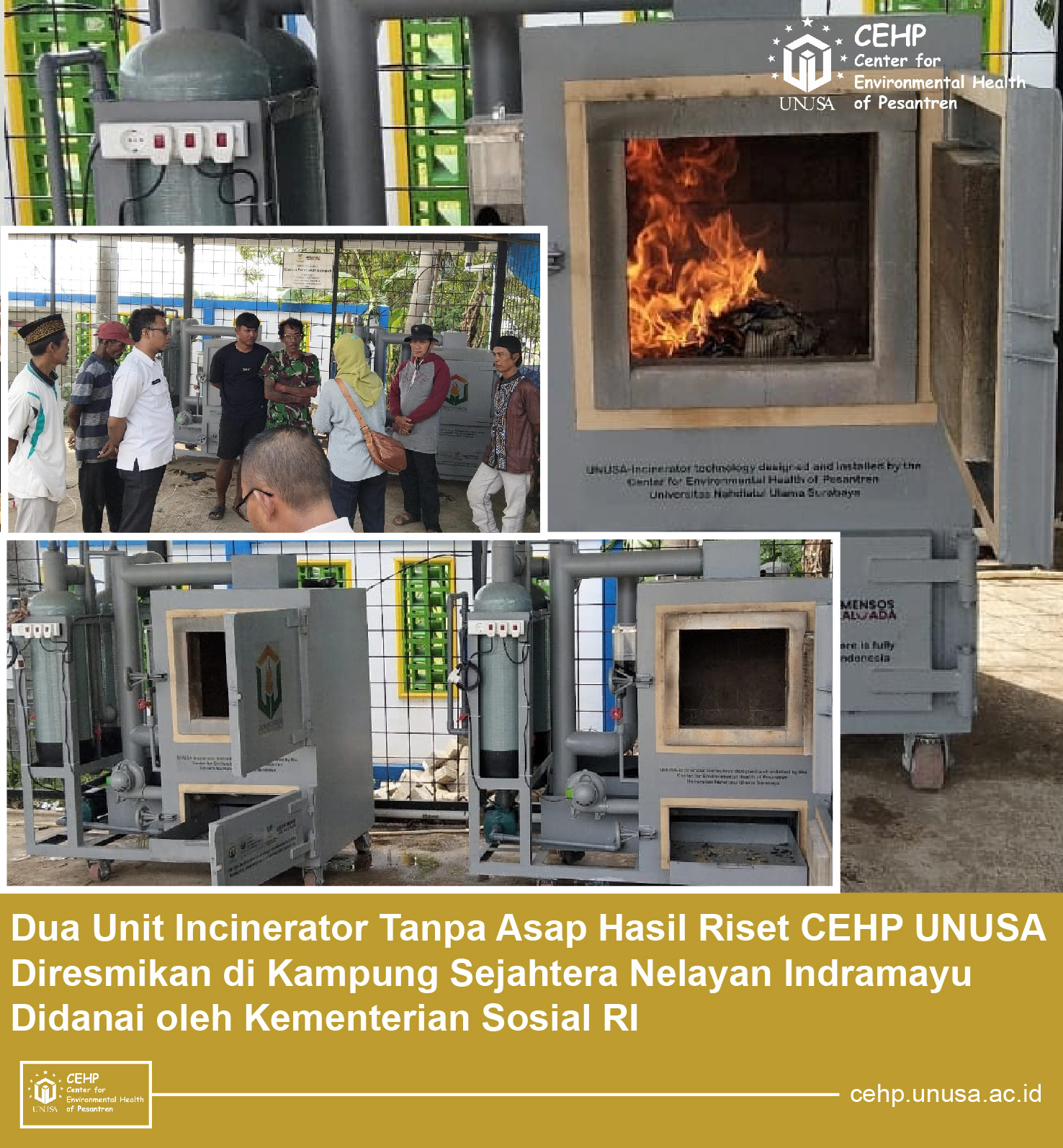
Two Smokeless Incinerator Units Resulting from CEHP UNUSA Research Inaugurated in Kampung Sejahtera Nelayan Indramayu, Funded by the Indonesian Ministry of Social Affairs
Indramayu, December 10, 2025. Two smokeless waste incinerators have been successfully installed in Kampung Sejahtera Nelayan, Indramayu, West Java. The installation of this facility is the result of a significant collaboration between the Ministry of Social Affairs of the Republic of Indonesia and Universitas Nahdlatul Ulama Surabaya (UNUSA) through the Center for Environmental Health of Pesantren (CEHP UNUSA) research center. These incinerators are designed to burn waste without producing harmful smoke emissions. This technology is expected to help address waste management issues, which have been a major challenge in densely populated coastal areas such as Kampung Sejahtera Nelayan Indramayu.
The innovative smokeless waste incinerator developed by CEHP UNUSA not only emphasizes waste disposal but also maintains clean and healthy air quality in the surrounding environment. With funding support from the Ministry of Social Affairs, this incinerator is one of the concrete implementations of a national program to encourage sustainable development and improve the quality of life of the fishing community in Kampung Sejahtera Nelayan. This facility also demonstrates the synergy between academic research and community needs, providing appropriate technological solutions that can support environmental cleanliness and sustainability while reducing the risk of air pollution from conventional waste incineration.
Providing by this environmentally friendly incinerator,
the Ministry of Social Affairs hopes to strengthen environmental protection
efforts while raising public awareness of the importance of responsible waste
management. UNUSA, as a technology researcher and developer, remains committed
to providing support and evaluating incinerator use to ensure optimal and
sustainable results. Furthermore, this program is expected to serve as a model
for other regions facing similar waste management challenges, allowing for replication
and a broader positive impact on the environment and public health throughout
Indonesia.